When somebody says they want an AI agent, it often turns out they want three simpler things: answer common questions, capture enquiries and make sure the right person follows up. That distinction saves money and reduces risk.
A chatbot answers; an agent can act
A straightforward AI chatbot responds to questions using information it has been given. A grounded chatbot might explain a service, outline opening hours or help a prospective customer find the right booking link. It does not need permission to alter other systems.
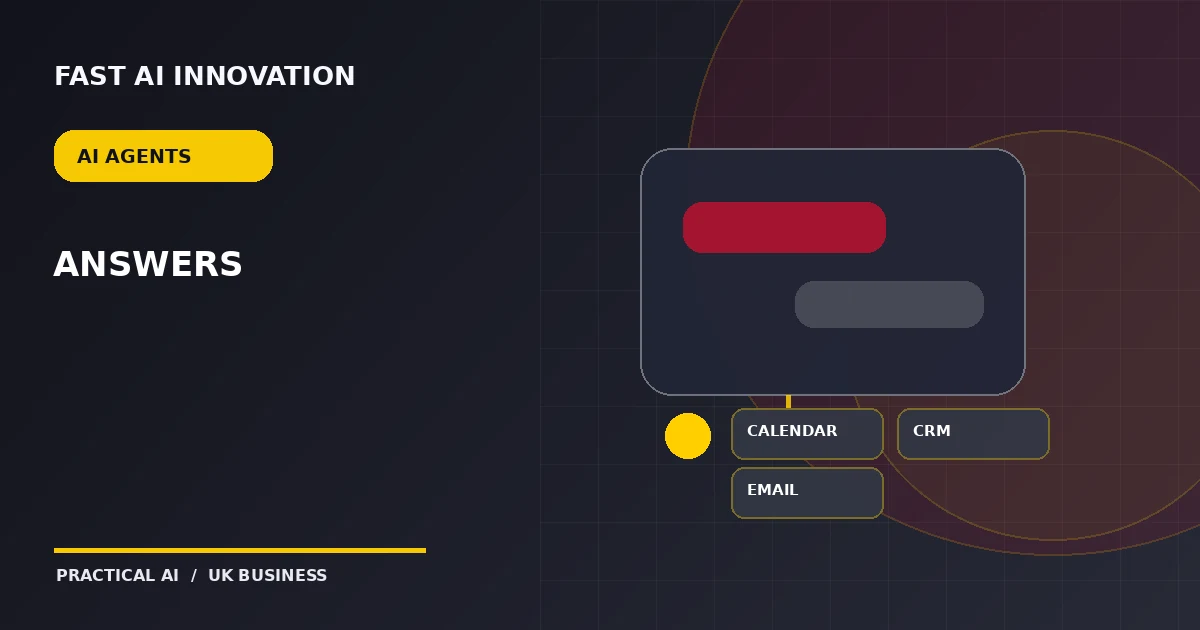
An AI agent can take steps using connected tools: check an authorised calendar, prepare a CRM entry, ask for missing information or draft an email. Those actions require permissions, error handling and clear limits. The word agent does not automatically mean better.
Start with the journey, not the technology
Consider a missed-call problem. An organisation may need an after-hours receptionist that explains services and captures callback requests. It may not need a system that can change appointments autonomously. A sensible first release might gather a name, preferred contact method and the broad reason for the enquiry, then offer a booking link managed by the calendar provider.
Another business might need its web enquiry, customer record and document workflow connected. That could justify an agent because a single action spans several systems. The work is not in making the model sound human. It is in making the hand-offs reliable.
Five decisions before building
- Knowledge: which approved pages, policies and service information can it use?
- Actions: may it only draft, or can it create a calendar hold or CRM record?
- Identity: how is the customer authenticated before accessing account details?
- Escalation: what happens when a question is unclear, sensitive or outside scope?
- Evidence: how will you test answers, audit actions and reverse mistakes?
A common failure is an assistant confidently inventing a price or availability that its knowledge source does not contain. Set a boundary: provide the approved answer, ask a clarifying question, or pass the case to a person.
What about voice AI?
Voice adds call handling, transcription, latency, consent notices and practical fallbacks. It can be valuable for telephone-heavy businesses, but a good voice interface still depends on the same workflow design and data controls as text chat. A poor handover can leave callers worse off than a simple voicemail.
Keep humans responsible
High-impact decisions—particularly those involving financial, medical, legal or employment matters—need stronger safeguards. The ICO’s AI guidance covers accountability, transparency, fairness and security where personal data is processed. Plan for approval gates and logging, and do not give broad account privileges to an assistant just to make an early demonstration easier.
How to scope a useful pilot
Write down ten representative customer questions, three requests the system must refuse or escalate, and two real hand-offs such as booking or drafting an email. Use these as acceptance tests. If it passes those consistently, you have a foundation worth expanding.
Fast AI Innovation can help design either approach: a focused chatbot, an AI receptionist or a connected agent integrated with your business processes. The first step is to agree what should happen, and what should never happen, when someone contacts you.
References and further reading
Want help making this work in your business?
Our AI Growth Managers do the hands-on work with you, in hours and days, not months.
- Free 20-minute call Talk through your idea or challenge with a real person.
- One-to-one session · £300 One hour to learn, build or automate something useful.
- AI sprints from £1,000 Four hours, a full day, or a zero-to-one launch.